
MK Kashiyama Parts: Quality Standards and Performance Features
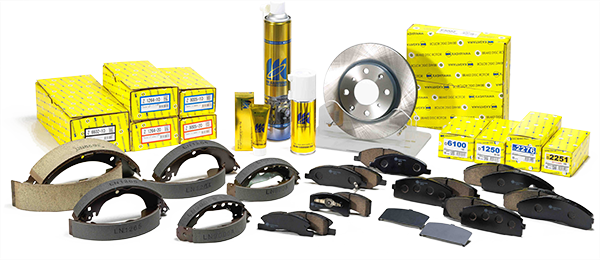
MK Kashiyama parts have, over the course of several decades, accumulated the kind of quiet authority that does not come from marketing campaigns or clever branding. It comes from consistency. From components that perform as described, in conditions that test their limits, on roads where failure carries real consequences. To understand why this matters, it helps to look carefully at what distinguishes a well-engineered brake part from one that merely looks the part on a shelf.
The Standard Behind the Product
What separates credible manufacturers from the rest is not simply the ability to produce a component that fits a vehicle. It is the ability to produce one that performs reliably across the full range of conditions a driver is likely to encounter.
MK Kashiyama operates within a quality framework shaped by decades of original equipment manufacturing. The brand supplies brake components to vehicle assembly lines, which means its internal standards are set against the demands of automakers rather than the more permissive tolerance ranges of the general aftermarket. That origin matters. It means that MK Kashiyama parts are designed to a specification set by engineers who understand what a braking system needs to do across the lifetime of a vehicle.
The quality standards applied to each product category include:
- Consistent friction coefficients across temperature ranges from cold starts to extended heavy use
- Tight dimensional tolerances to ensure correct caliper and rotor fitment without modification
- Material compositions that meet or exceed international automotive safety certifications
- Batch testing protocols that verify performance before components reach distribution
Brake Pads: Friction Science in Practice
The MK Kashiyama brake pad range is perhaps the most recognisable expression of the brand’s engineering philosophy. Friction material formulation is a precise discipline. The compound must generate sufficient stopping force, resist heat degradation, minimise dust, operate quietly and wear evenly over time.
MK Kashiyama approaches this through a tiered product architecture:
- Low-metallic compounds for everyday passenger vehicles, balancing noise reduction with reliable stopping performance
- Semi-metallic formulations that handle higher operating temperatures, suited to vehicles carrying heavier loads or driven in demanding conditions
- Ceramic compound variants that produce minimal brake dust and maintain stable friction levels across a broad temperature window
- OEM-equivalent pads that replicate the factory specification for vehicles where the original part is difficult to source
A driver in Singapore navigating the daily stop-start rhythm of the Pan Island Expressway has different braking demands from a driver making occasional highway runs. MK Kashiyama’s range accounts for that difference.
Rotors and Discs: The Other Half of the Equation
Brake pads work within a system, and the rotor is as important to that system as the friction material pressing against it. MK Kashiyama brake rotors are cast and machined to tolerances that ensure even pad contact across the full braking surface. Lateral runout, one of the leading causes of brake pedal pulsation and judder, is a problem that good engineering prevents at the manufacturing stage rather than addresses after the fact.
The ventilated rotor designs in the mk kashiyama range incorporate internal vane structures that promote airflow through the disc body during braking. In Singapore’s climate, where ambient temperatures are already elevated before a single brake application occurs, that thermal management is a practical necessity for maintaining consistent stopping distances.
Performance in Singapore’s Conditions
Singapore’s automotive environment presents specific challenges that quality brake components must meet. High ambient temperature, dense urban traffic and frequent braking events expose the limitations of inferior parts more quickly than most other markets.
As one experienced workshop technician based in the Bukit Timah area observed: “Drivers here don’t always realise how hard they’re working their brakes. In this heat, you need parts that are built for it, not just parts that are cheap.”
MK Kashiyama parts have built a strong presence in Singapore’s aftermarket precisely because they address that reality. Their compatibility with the Japanese, Korean and European models that dominate local roads makes them a straightforward choice for workshops maintaining a varied vehicle fleet.
Fitment Accuracy and Application Coverage
One practical advantage of sourcing MK Kashiyama components is the depth of the application catalogue. For mechanics and parts suppliers, accurate fitment information reduces the risk of incorrect orders and avoids the costly problem of returning incompatible parts.
When selecting MK Kashiyama brake pads or rotors, the recommended process is straightforward:
- Verify the vehicle’s make, model, production year and engine specification
- Cross-reference against the published fitment catalogue using the correct part number
- Confirm rotor diameter and pad shape against the existing component before installation
- Follow the recommended bedding procedure after fitting new friction material
Why Quality Standards Define Long-Term Value
The conversation around brake components often defaults to price. That is understandable. Brake pads are a consumable item, and the temptation to minimise cost is real. But when a brake component underperforms, the consequences are not limited to inconvenience or accelerated wear. They involve safety.
The investment in properly engineered components, specified correctly for the vehicle and fitted with care, is an investment in predictable, reliable stopping performance. That is precisely the standard that mk kashiyama has built its reputation upon, and it is the reason its parts continue to be specified by workshops and drivers who take braking performance as seriously as it deserves to be taken.